How to Tell if Your Family Owned Slaves
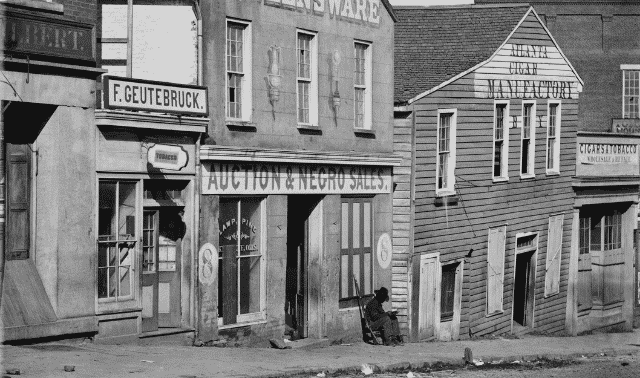
Have y'all ever searched for ancestors who seemed to leave no paper trail? You know the ones: The nomads who elude the census. The relatives who didn't ain property. The women (darn those surname changes!). The repose folks who never made a ripple—let lonely a splash—across the folio of a newspaper.
Now imagine searching for ancestors who were non only poor and landless, simply weren't even considered people by their government. They came in ships without rider lists. They would never become naturalized or vote. They weren't named in censuses. They appear in tax records, merely only as objects being taxed.
This is the documentary darkness of American slavery. To find an ancestor's name in that darkness can be a long and difficult task. You start past researching more than recent kin, simply all the while yous're looking over their shoulders for evidence of slaveowners who held by generations in bondage. Once you've crossed over into the slave era, you reverse your focus. Now you search for the slaveholders—and await over their shoulders for glimpses of your ancestors.
Of form, not every ancestor of African origin was enslaved. Merely most 90 percentage were. If you lot have at least one African American branch on your family tree, chances are you lot'll somewhen be doing slave research. Allow'south get started.
Your unique history
In 1619, Dutch slave traders sold 20 African captives to the settlers of Jamestown, Va. For Americans with roots in Africa, this marked the offset of your ancestors' arrival in America. By 1808, when the importation of slaves was constitutionally prohibited, the Us was habitation to some one million slaves.
Your African ancestors were amidst the nation'due south original settlers. For nearly 240 years, slave labor helped build America, nevertheless virtually of these invisible souls have yet to be identified or acknowledged. Now it's up to y'all, their descendants, to reconstruct the stories of their lives.
These stories of slavery went largely untold until Alex Haley'southward Roots. Later the Civil War, descendants of both slaves and slaveholders suffered commonage amnesia. Old slaves rarely spoke of their lives in bondage — most simply wanted to forget. Today, however, African Americans embrace this heritage. African American family reunions accept go annual events, bringing together far-flung relatives, renewing involvement in oft forgotten ancestors and leading many to actively enquiry their family history. Fifty-fifty the millions of Americans with mixed-racial ancestry — estimates of the white population with some black beginnings range from 10 to 24 percent — are digging into their heritage, exploring this lost part of their past.
Because of your African ancestors' unique history in this state, your search for them will pose special challenges. You can use standard genealogical techniques, as presented in every outcome of Family unit Tree Magazine, to trace back to 1870, the yr of the get-go postal service-Ceremonious War census. Merely when you lot hit the pre-Ceremonious War years, the records are no longer in the name of your ancestors but in the names of those who endemic them. Even those African Americans freed prior to the Civil State of war were at some point slaves or the descendants of slaves. Identifying the slaveholding families and locating their records will be the keys to your quest.
These seven steps tin help y'all get started:
1. Offset with basic genealogy
Start, practice your homework. Read a expert African American genealogy guidebook, such as Dee Parmer Woodtor's Finding A Place Called Habitation: A Guide to African-American Genealogy and Historical Identity (Random House). And observe a guide that covers basic techniques of research in American genealogy, such as Commencement Steps in Genealogy by Desmond Walls Allen (Betterway Books) or Un-puzzling Your Past: A Basic Guide to Genealogy 3rd edition by Emily Croom (Betterway Books). Woodtor's interactive guide for beginners on AfriGeneas provides tips on how and where to get started, along with suggested books and links.
Reach out to relatives
Once you've collected copies of family papers and photos like this 1, start interviewing older family members showtime.
Start past chatting with elderly relatives, along with kin who are family "storykeepers" or who take old pictures or mementos. Only don't view these lives as mere stepping stones to the past. Ask folks about their own experiences, families, friendships and accomplishments. Ask what life was like during the Civil Rights and Jim Crow eras. Record the chat if you tin can, so you can return to clues in it that may only later on seem of import.

Oral history plays an of import office in African American genealogy inquiry. Learn how to employ the stories passed down to uncover records and find your family history.
When the memories are flowing freely, ask what your relative knows well-nigh slavery in the family's past. Were any stories passed downwards? What about slaveholders connected to your family unit? Don't be discouraged if the person doesn't offer answers or doesn't want to talk about information technology. Instead, enquire questions that will guide your research in the right direction.
Make full out a family tree chart
Effort filling out every bit much equally you lot tin can on a full-blooded chart. This will help determine just how much or how little yous know most your ancestors. Collect copies of all family papers, funeral programs, photographs and other memorabilia. Visit the family unit cemetery, if possible, to check ancestors' names and dates. Apply the information y'all find in all these sources to fill in gaps on your chart.
Now decide which ancestral line to search. Consider starting with the ancestors you have the most data nigh or whose history is easiest to access. When y'all've done as much as you tin can on paper, find and interview the family, beginning with older family unit members. Failing memories and death claimed much of our history, especially from the slavery years — capture this living heritage while yous can.
2. Find mail-Civil State of war records
Census records
As for most Americans, government records are the primary source of genealogical information for African Americans — peculiarly federal census records. Brand certain to check the 1870 and 1880 agricultural censuses, as well. And don't stop at 1870: Perhaps your ancestors were freed before the Civil War.
Federal censuses can have you back in x-yr intervals to the Civil War era. The 1940 demography is only 75 years removed from slavery. So with each census moving backward from there, you'll observe increasing numbers of erstwhile slaves and their families. The clues will help you reconstruct families: relationships (1880 on); birthplaces (1860 on) and historic period (1850 on); the number of children a adult female had borne (1900 and 1910); how many years a couple was married (1900 and 1910) and more.
Exist especially alert when you reach the 1870 census, the first taken afterward slavery ended and the outset to enumerate former slaves past name. Every household fellow member is named, but relationships aren't specified. You may be looking at "families" who banded together after emancipation left them stranded in hostile environments far from blood relatives. A couple or single parent may take taken in—not necessarily given birth to—the children listed in the household.
Finally, look for your relatives in the 1860 and 1850 censuses. If you discover them named, it means they were gratuitous at the time. If they're absent, they were likely enslaved.
Race identifiers in the census can be helpful if, for case, a relative is consistently identified as "mulatto" (of mixed black and white ancestry) versus "colored." But call back that it'southward quite common to see a person's race announced unlike means over time. Census-takers often guessed based on skin tone, and people may accept self-identified their race differently, particularly afterwards moving to a new place.
Freedmen's Bureau records
The U.s. Agency of Refugees, Freedmen and Abandoned Lands, aka the Freedmen's Bureau, was created after the Civil War to deal with the needs of the emancipated slave population. In Freedmen's Bureau records, kept from 1865 to 1872, you lot may find:
- hospital records or registers
- labor contracts between freedmen and planters
- enrollments for local freedmen schools
- marriage registers
- lists of food rations
- reports of outrages, disputes and courtroom cases brought by freedmen against whites
- lists of freedmen and their families
- correspondence of local field agents describing the atmospheric condition in a detail area.
Y'all may discover other information as well. You can search virtually Freedman's Bureau Records at FamilySearch.org.
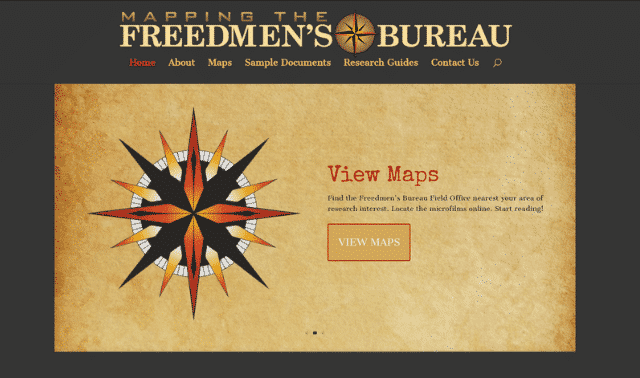
Larn how to use Mapping the Freedmen's Bureau website to research African American ancestors after the Civil War.
Freedman's Bank records
Entirely divide from the Freedmen'due south Bureau, the Freedman's Banking company was organized later the state of war to assistance African American wage-earners manage their money. Depository financial institution branches opened in 37 cities, mostly in the South. Signature registers of depositors survive for 29 bank branches. These requested a corking deal of genealogical information, such every bit names of parents, siblings and children; place of birth; age; marital status; and residence. Search these registers for ancestors, other relatives, in-laws, and your known relatives' black neighbors in the 1870 census (y'all may after observe they had the same slaveowner every bit your family). Y'all'll notice this collection indexed and digitized on Ancestry.com, FamilySearch.org, and HeritageQuest (available through many public libraries).
The Freedmen's Agency Online has information about related records. Y'all also can employ these records on microfilm at the National Archives and Records Administration and major research libraries. Learn more at Archives.org.
Ceremonious war veterans' pensions
Civil War veterans' pension records may as well agree clues. (To encounter if your ancestor was among the more than than 250,000 slaves and free blacks who fought for the Union, search the Civil War Soldiers and Sailors System.) As part of the alimony process, applicants were required to testify their identity. In most instances, you volition find their appointment and place of birth — which may tell you the metropolis, county or plantation where they were born — likewise equally marriage records and names and ages of parents and children.
Relatives, neighbors and friends submitted affidavits that may comprise data about their relationships to the applicant, perhaps naming a plantation, owner or family unit connection. Widows had to provide proof of marriage in the course of affidavits or marriage certificates, too as previous names they may accept used. Applicants had to name where they enlisted and their service history, as well as residences and occupations post-obit the war. While some records are more helpful than others, you're sure to detect some new or confirming facts here.
Vital records
Gather vital records for all family members (not just directly ancestors) as yous work your way back in time. These will assistance you reconstruct the timelines of relatives' lives and their family unit relationships. They as well may comprise clues to the more distant past. Don't settle for indexed versions of a record unless yous can't legally admission the original. Indexes oft incorporate mistakes and may not include everything in the actual record.
Search first for government vital records kept at the city, canton and state levels. Notation that recent records might be subject to privacy restrictions. Onetime matrimony records, unless they were lost, are mostly available back to the appointment a canton was formed. Many counties and cities began recording deaths and later, births in the decades following the Civil State of war. Country governments eventually took over birth and expiry registration, generally by the early 20th century.
Our Vital Records nautical chart tells you when statewide registration began for each country. If you don't find your antecedent in vital records, ask local experts whether a separate "colored" register was kept and where to find information technology. Similarly, exist enlightened that older indexes may be "whites-only."
Other sources of information on births, marriages and deaths tin fill in gaps where vital records are missing. They also may give you new or unlike information. For example, obituaries often include nascence data, relatives' names, residences and more. Sometime newspapers may sketch out the lives of the formerly enslaved and mention relatives from whom they were separated.
Those who applied for Social Security benefits start in the mid 1930s filled out SS-5 forms with their birth dates and places, and parents' full names. First, search the Social Security Expiry Index (SSDI, gratuitous at FamilySearch.org) to locate a Social Security number, which confirms that an SS-5 should exist. Notation that records for people built-in less than 100 years ago may be field of study to privacy restrictions. Larn more well-nigh requesting records hither.
Land Records
If your ancestor was identified as a landowner in the 1870 census, expect for the deed(s) to their property. A former slave who owned land before long later on the end of slavery may have gotten it from a slaveholder or someone connected with the slaveholder's family. Deeds are usually among county courtroom records.
3. Zero in on 1870
Finding your ancestors in the 1870 census is the kickoff step toward solving the mystery of their years in chains. After the Ceremonious War, near recently freed slaves remained at or about the identify they'd lived before the state of war. Many who did relocate were reuniting with family they'd been separated from.
This search volition probably take y'all back to a county or parish somewhere in the South. From 1790 until 1900, 90 percent of African Americans lived in the S, mostly in rural areas. For many ex-slaves, the migration northeast, n and west didn't begin until later on 1900.
If your ancestors were in the North in 1870, it'south possible they were freed prior to the war. Even so, you'll probably have to search for a slaveholder since most free blacks were slaves at some indicate. Records documenting their freedom were ordinarily recorded in county courthouses in probate or deed records.
If you can't find your ancestors in the 1870 census, information technology's likely they lived in the same state, county and community in 1880. So brand 1880 your focus instead.
The 1870 censuses will aid yous lay the foundation for your enquiry in other records:
- You will learn which ancestors probably were children in 1870 and perhaps the names of one or both of their parents.
- Yous might identify the ancestral heads of household in 1870 and relatives who lived with them.
- You might discover other related families living in the bequeathed neighborhood in 1870.
- You might identify white families of the aforementioned surname as your family unit in censuses from 1870 forrard.
- You might notice certain white families consistently enumerated near your family in censuses from 1870 frontwards.
All of these discoveries are important, only the terminal ii will be particularly important in arriving at the name of your ancestor's slaveholder — either through the same-surname approach or past location.
Look carefully at the community where your ancestors lived in 1870. Ask:
- Who were your ancestors' neighbors?
- How old were your ancestors and their neighbors?
- Where were they born?
- Are there others in the neighborhood with the same surname as your ancestors?
- Do neighboring families have whatsoever surnames in common with your ancestors?
- Do the ages of your ancestor's children bespeak they were a family before the Civil War?
Your answers will help determine if those living in the neighborhood are related or connected in other ways.
iv. Decide the given and surname of the ancestor and his or her slaveholder
Unlike other ethnic groups arriving in America, enslaved Africans were systematically stripped of their cultural traditions and social customs when brought to this state. As function of this process, recently arrived Africans were routinely renamed before long after being removed from the slave transport. Until the end of the Civil War, about slaves were identified by beginning proper noun merely. Slaves on the same plantation with the same given names were distinguished by their size, age or color. Afterward the Civil War, newly freed slaves had to choose surnames for official identification. Their reasons for choosing a surname varied and many would change surnames a number of times before settling on a final choice.
Genealogical lineages depend on linking names into family relationships. Researchers apply other tools, such every bit dates and places, to confirm the names in each family in each generation. Successful genealogists, therefore, pay shut attending to both given names and surnames inside the family and the customs, to variant spellings of names and to evaluation of names in documents.
Given names
Though your ancestors' surnames were crucial in contempo records, the key to identifying them in your pre-Civil War search will be their first names. Pay close attention to the given names of your ancestors' family as well every bit those of their neighbors. Compare the names of suspected ancestors you find in any slave documents with those living in the neighborhood in 1870. This may exist the only way to found that they are i and the same.
Slaveholders rarely identified slaves by their formal given names in records; instead they used nicknames. So consider the possible variations of names that may accept been used to identify an ancestor. My antecedent James Humphreys, for example, would always be listed as "Jim," Jane Green as "Jenny," Jesse Humphreys equally "Jess," Martill as "Till" and Elizabeth Weathersby equally "Betsy." Such a thorough and complete review of the 1870 census may reveal the identity of several new and previously unknown generations.
Until the end of the Civil State of war, most slaves were identified publicly by just a given proper noun. Slaves on the same plantation with the same given names were distinguished by historic period, size or color ("old Jim" or "young Jim," "big Moses" or "little Moses"). But slaves followed their own naming practices by using nicknames, a practice still common today.
Because of the restrictions imposed by slavery and the lack of documentation on slave culture, naming practices are difficult to verify. Scholars have speculated that naming patterns existed to the extent possible to identify kinship or maintain family ties. If your research has taken you back several generations into slavery, sentinel for the repeated employ of given names, specially if they are unique. As ever, compare those names with names of postal service-Civil War family unit members.
Surnames
Family historians often assume, mistakenly, that nearly freed slaves took the surname of their near recent slaveholder. In reality, the surname might take belonged to a prior slaveholder — the get-go, the favorite or the longest — or the slaveholder of a parent or grandparent. Historian Eugene Genovese observed that erstwhile slaves had a "meaning reason for going back in time to take the proper name of the starting time master they had ever had, or peradventure of the starting time whom they could remember as having been a decent man: by and so doing, they recaptured, every bit best they could, their ain history."
Of course, some families chose surnames with no apparent connexion to former slaveholders. Some individuals or families chose:
- The surname of a locally prominent family or a famous American.
- A name with an occupational link to the bearer — Bricklayer or Carpenter.
- A name identifying a personal characteristic — Potent, Dark-brown, Freeman or African.
- Perhaps a given name of choice combined with a given name by which the person was known or the name of a parent — James Caesar or John Caleb.
- A surname with a possible geographic connectedness to the family.
- A name with a religious or symbolic significance.
- As author Joel Williamson put it, a proper name "for no apparent reason other than the pleasure of the author," including such names as Prince, Captain or Governor.
- Unlike surnames. For case, Volition Oats of Mercer County, Ky., told an interviewer that his brothers were Jim and Lige (Elijah) Coffey. Their masters had been Lewis Oats and his sister. Apparently, 1 brother chose the Oats proper name, but the other ii did non.
- Different surnames at different times.
The ancestor'south surname might exist the clue that opens the door to your family's pre-Civil War history. For some families, the reason backside the selection of a surname is already known, for others the reason may be discovered during their research, and for the bulk the reason may never exist known. If you lot already know the history behind your family'south selection of a surname, you can eliminate years of tedious and frequently frustrating research.
In my research, only twice did I detect why my ancestors took their surname, and both took the name of a slaveholder. My great-bang-up-grandfather took the name of his slaveholder-father — my family unit has always known this. In fact, we have his slaveholder-father's portrait painted in the late 1840s or early 1850s. My 3rd great-grandmother also took the name of an owner, and it was her surname that led to the identification of her owner. Though I've discovered the owners of a number of ancestors, I've still non been able to determine why they chose their surnames.
The slaveholder'southward surname
Knowing the name of the slaveholding family unit is essential to move your research to the next level. Those who already know this can skip ahead to step 6. If this information was lost with your ancestors, outset with the presumption that they took their one-time slaveholder's surname. Beginning look at the neighborhood in which your ancestors lived in 1870, then augment your search countywide, or even statewide if your ancestors' surname was unique, until you've collected a listing of candidates. Be sure to include any possible spelling variations of the surname your antecedent was using. Consider going dorsum as far every bit the 1850 census.
If you don't find the same or similar surnames in records from 1850 or later, go along to the next step. Otherwise, y'all may narrow the pool of candidates by checking the slave censuses of 1850 and 1860 to determine if they owned slaves prior to the state of war. Cross-reference the ages of your ancestors with the ages of the slaves listed in the schedules. (Simply historic period, gender and skin color of slaves were listed in these schedules.) This will either strengthen any possible connection or eliminate unlikely candidates. When checking the 1860 and 1870 censuses, note how much real estate each slaveholder candidate owned, and compare their places of nascency with your ancestors'.
five. Study your family unit's location
If the same-surname approach fails, studying where your ancestors lived in 1870 may hold the primal to identifying a one-time slave-holder. Neither the newly freed slaves nor their quondam owners ventured far from their pre-Civil War homes immediately after the war. The black population remained heavily rural. In the economic wasteland of the Southward after the state of war, one-time slaves and slaveholders alike faced desperate atmospheric condition. Partly out of fidelity and partly from necessity, many former slaves and slaveholders continued their relationships. So fifty-fifty in 1870 your ancestors were probably still living on land endemic by their onetime masters.
Find out who endemic the land on which your ancestors lived in 1870 and y'all're likely to detect the identity of their slaveholder as well. (If your search of Freedmen'due south Bureau records turns up labor contracts for your ancestors, consider yourself fortunate. The contractor and former slave owner are commonly the same. In this case, proceed to stride 6 and beginning searching that family's records.) The quickest way to discover out who owned the property where your ancestors may have lived is searching pre-1870 county state taxation records. Land plat books likewise may assist identify local landowners. (Check the courthouse in the canton you're researching, the Family History Library, or the state athenaeum to run into if these records exist.)
Many census pages proper noun the township, town, district or nearest post function at the acme of the page. Usually, residents enumerated with the same page heading lived in the same general surface area. As you read the 1870 census, re-create downwards the names of white families living in the neighborhood for five or more than pages on either side of your ancestors. Note the value of these families' real estate. If they owned no existent estate in 1870, it's possible they didn't own land before the state of war and are less probable to accept had slaves.
Look for other clues to connect your family to a quondam slaveholder:
- If your adult ancestors were centre-aged or elderly and were built-in in another state, look for white neighbors who were born in that state.
- Look at the migration design of your family as shown in the birthplaces reported in the 1870 census for family members. If unlike birthplaces were reported for different individuals, make a timeline showing where the family was when each person was born. Does a neighboring white family mirror that migration pattern?
- If your ancestors lived in a Southern town or city in 1870, they also might have been there before the war. In this instance, brainstorm with the same process described in a higher place, but realize that urban slaveholders mostly had few slaves.
1860 and 1850 slave schedules and census records
Next, cross-reference all potential slaveholder candidates with the 1850 and 1860 slave schedules to help narrow the list. If you're unable to locate or admission these records, closely examine all the white families living near your ancestors in 1870. At first, consider only those white families with property. Determine if they owned state before the war, were slave owners, and lived in the aforementioned place. Your answers volition aid determine which families will be the focus of your search.
Wait also at the names of several neighboring slaveholders on either side of a possible slaveholder candidate in the slave schedule. Since only the slaveholding population is listed in these schedules, you get a fairly detailed view of the slave community as it might have existed before the Ceremonious War. If your ancestors and their family members weren't with the suspected candidate(s), they might take been held by a neighboring slaveholder.
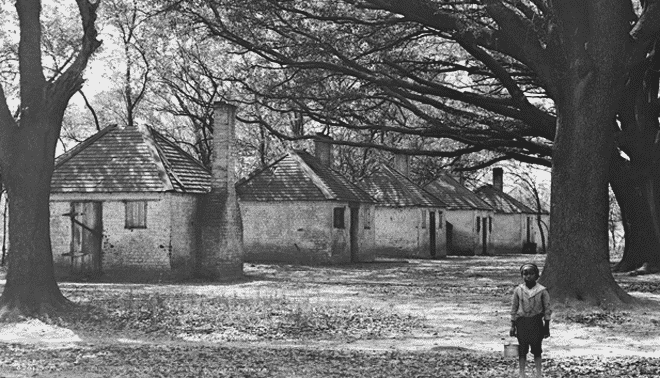
Follow these steps for using 1850 and 1860 slave schedules to trace your slave ancestors.
The 1850 and 1860 costless schedules asked questions similar to the 1870 demography, and none showed the human relationship of household members to the caput of the household — married woman, son, girl. As you look for slaveholder candidates, these censuses tin provide such information as:
- the name, historic period, sex, color, birthplace and occupation of each free person in each free household
- the value of real estate a person owned — helpful because virtually slaveholders owned country
- the value of personal manor a person owned in 1860 — helpful because a high value of personal holding could bespeak slaves in the household
Expect at the 1860 free population census to determine what the community looked like prior to the state of war. If your search reveals that much of the free population in 1870 was there in 1860, the community might non have changed significantly afterwards the war.
Follow these steps for using 1850 and 1860 slave schedules to trace your slave ancestors.
6. Research "the other family"
Now that you've determined which slaveholding families warrant farther investigation, commencement researching records left by them. Focus on records that either name slaves or betoken slave ownership. The number of records available will depend on whether the family was a big or pocket-size slaveholder. The virtually thorough and consummate records were the business records of big slaveholding families. Simply these families made up only a small part of the slave-owning population, and finding such private records — if they however exist — could be a challenge.
Probate records
When a slaveholder died, his or her slaves were inventoried and disposed of along with the residuum of the manor through the probate process. Owners often willed slaves to children or other family unit. Enslaved individuals are often identified in wills, manor inventories and other probate records by a first name, gender, approximate historic period and sometimes marketplace value. Search probate files for members of the slaveholding family (including in-laws) before 1865 to trace ownership back in time and maybe link to other relatives.
Inventories
Also often office of estate papers, inventories itemized all the deceased's property at the time of death. Slaves would be listed with sex and age.
Account books
The executor of the estate kept account books, which may record when the deceased's slaves were sold—and to whom. You might find them in probate file collections or on their ain at historical societies, state athenaeum and in collections of family unit papers.
Besides look for the volition of the last known or suspected slaveholder fifty-fifty if it was long after the Ceremonious War, because former slaves occasionally announced as heirs.
Note that not every white Southerner owned slaves, and whites weren't the only slave owners. Little has been written well-nigh African Americans who endemic slaves, but information technology appears the exercise was common in Louisiana, South Carolina, Maryland and Virginia. Anthony Johnson, a gratuitous African and onetime indentured servant, won a court case in 1654 that, ironically, declared his servant a slave for life. Yous can larn more almost this phenomenon in Black Slaveowners: Gratis Black Slave Masters in South Carolina, 1790-1860 by Larry Koger (University of Southward Carolina Press).
Mortgages
A slaveholder could use his slave equally collateral for another purchase. The mortgage recording the transaction should include the slaveholder'due south proper noun, terms of the mortgage, description of the enslaved (first name, gender, age, marketplace value). Look for follow-up paperwork showing the mortgage was paid, or for evidence the slave was sold. In many places, that would announced in deed books and whatsoever court handled foreclosures.
Estate records
Manor records are a affair of public tape and were required for large and small-scale slaveholder alike. Other sources likely to proper name your antecedent are property records, such as deeds, mortgages and bill of sale records. Personal property tax records, state and federal demography records as well as the 1850 and 1860 slave schedules can be used to assist track slave buying over time, just are not likely to name your ancestors.
Estate records of slaveholding families may provide the most comprehensive picture of your ancestors' lives. It could take as little every bit a few months or as long as ten years to settle an estate. If yous locate an manor document naming an ancestor, research the estate records to meet if other ancestors are named. The quantity and quality of information found in these records besides will depend on the person making the record. A meticulous record keeper may provide a wealth of information, such equally unabridged family units, ages, births, deaths and pare color, whereas others may provide only generic information.
These records may also provide insight into your ancestors' diet, the clothing they wore, how often they got clothing, their wellness, and whatever special skills or trade they may take had. Carefully study all related documents, not just the one on which your ancestor is named.
Manuscript collections
Typically, larger plantations kept meticulous records regarding expenses for clothing or medical care. For these slaveholders, manuscript collections of account books, business and personal papers tin testify valuable resources. Manuscript collections tin can be in diverse locations: city, county or state historical or genealogical societies; state archives; and public or university libraries. Most societies and libraries publish manuscript collection guides on their websites, and then search Google on the slave owning family's name.
Deeds
These papers tape the transfer of property on the basis of a auction, souvenir or trust. Slaves were sometimes transferred via deeds. Deeds are usually in county courthouses, but might accept been transferred to state archives. You'll also find some on FHL microfilm—run a search on your ancestor's county and await for the deed records heading.
Because the lives of the slaveholder and slave families are and so intertwined, yous need to study the owner family unit'due south history and genealogy to fully explore your own. Slaves contributed non just to a family unit's financial worth simply also to their status in the community. In many instances, slaves remained in the same family for generations. Equally valuable "property," they were transferred by inheritance, gift or deed to sons, daughters, sisters, brothers and grandchildren.
One time you find a slaveholder, tracking that slaveholder'south genealogy dorsum may help lead to the identity of your ancestors' parents or even grandparents, who may have been in that family for generations. Fortunately, many of these families' histories and genealogies accept already been published and can be institute in genealogy libraries, athenaeum and on the internet.
7. Slave documents tell a story
Finding a document naming a slave ancestor or ancestors can exist a crusade for celebration. But your greatest reward may come up from the secrets that these documents reveal about your ancestors' lives.
Once you've got a potent lead on a potential slaveholder, it'due south time to switch the focus of your research to that person and his or her family. Slaves are unlikely to have left records in their own names; any mention of them volition near likely appear among the records and stories of the slaveholders.
Several records at the county courthouse may mention a slaveholding family'southward enslaved "assets." These aren't consistently available on microfilm or online, nor are they always indexed. The records may accept been kept in different ways from identify to identify. So chances are yous'll need to go dig for the following types of records in person:
Bills of auction or deeds of souvenir
Slaves were substantial pieces of property. When a slaveholder transferred them to someone else, a transfer was ordinarily recorded at the canton courthouse. Bills of sale included the names of the buyer and seller, their counties of residence, the date of sale and the buy cost. You'll besides usually discover the beginning proper name, gender and approximate age of the slave. Sometimes, especially for deeds of gifts, the deed states relationship betwixt buyer and seller.
Hiring out
Sometimes slaveholders hired out their slaves to piece of work for others, oft when a slaveholder needed the money, had no work for that person or couldn't fairly supervise the slave. The ii contracting parties were the slaveholder and the person hiring the work; the slave often was described by first name, gender and age. The contract also details the length of the work term, financial terms and often, the nature of the work to be done. Look for contracts like these in human activity books or Freedmen's Agency records. If yous don't see them, inquire a local skilful where they're filed.
Manumissions
A slaveholder filed a manumission (emancipation) with the court when freeing a slave. Search for them in deed books. Oct. 4, 1841, Benjamin Prall filed manumission papers in Mercer County, Ky., "in consideration of the faithful service of my yellowish woman Gabriella nigh twenty seven years onetime do hereby emancipate and ready free said woman and her two children one by the name of James Walls virtually six years old and the other by the name of Harriett well-nigh two years erstwhile." The person being freed was identified by name, gender and age. You also may find stipulations on that person's liberty and the motives of the slaveholder. Note that manumissions don't exist for those freed every bit a natural issue of the Civil State of war.
Court orders
A manumission wasn't ever the terminal document required for freedom: a court social club besides may have been necessary. A bondsman—frequently the slaveholder, former slaveholder, relative or friend—may have posted a bond certifying the freed person'south good hereafter beliefs.
A research strategy alone is no guarantee that your search will be successful. But with adept research skills, patience, persistence, good instincts and lots of luck, y'all can go a long style toward reconstructing the lives of these invisible souls — your forgotten African American ancestors.
Information provided in this article was written by Franklin Carter Smith, Emily Anne Croom, Kenyatta D. Berry, Deborah A. Abbott and Sunny Jane Morton
Information in this article appeared in the Feb 2001 (Smith), December 2002 (Smith and Croom), January 2010 (Berry) and January/February 2015 (Abbott and Morton) problems of Family unit Tree Mag.
FamilyTreeMagazine.com is a participant in affiliate programs through Amazon and Genealogical Publishing Co. It provides a means for this site to earn advertising fees, past advertising and linking to affiliated websites.
Get Your Gratuitous Essential Genealogy Research Forms
Sign up for the Family Tree Newsletter and receive 10 research forms as a special cheers!
Become Your Costless Genealogy Forms
Source: https://www.familytreemagazine.com/heritage/african-american/finding-slave-ancestors/
0 Response to "How to Tell if Your Family Owned Slaves"
Post a Comment